
Retaining Walls & Stonework
Stone retaining walls built from the base up
Structural walls, steps, walkways and accents: base and drainage first, then the stone that suits the house.
The part you never see comes first
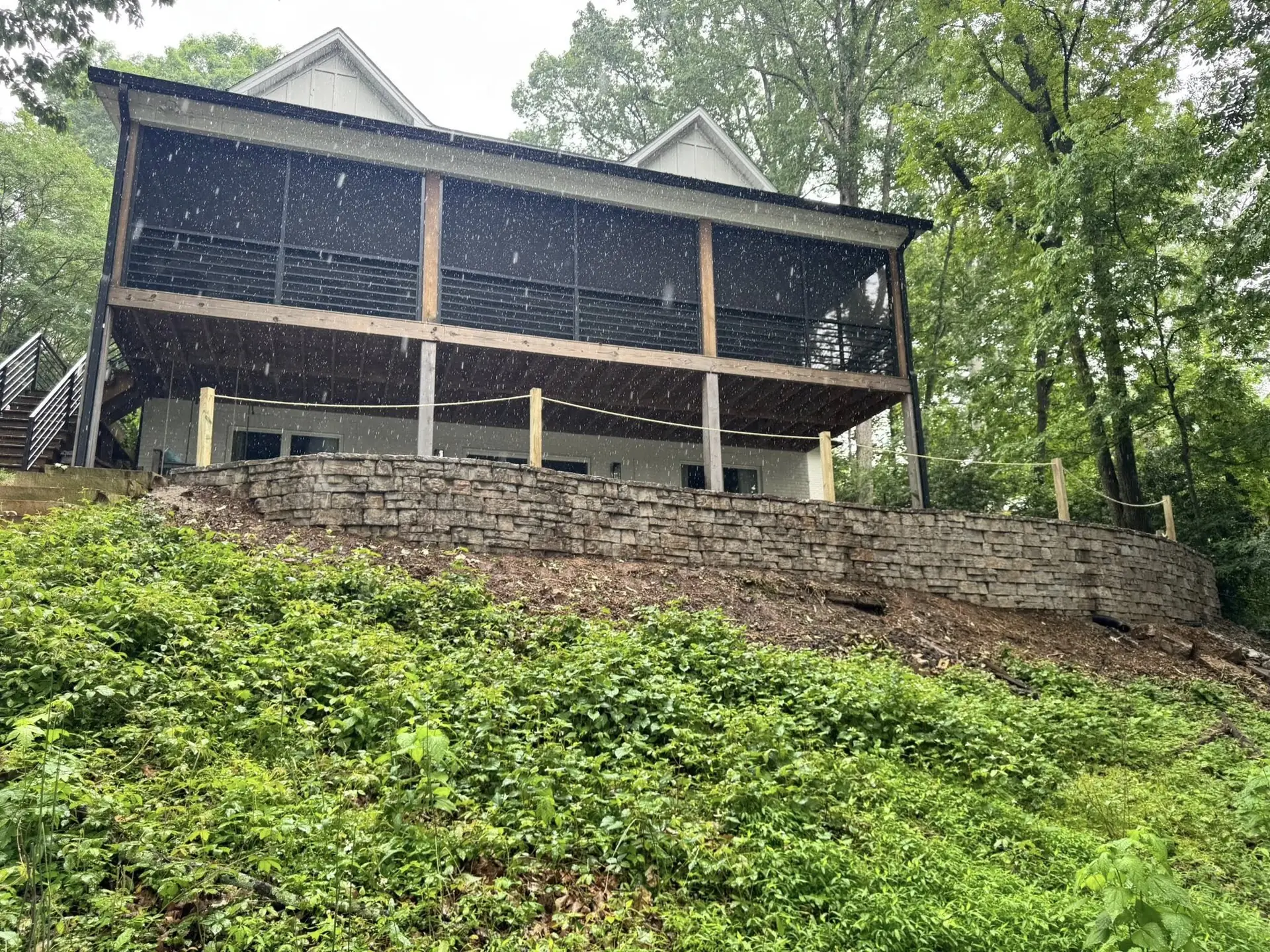
A retaining wall is only as good as what is behind it and beneath it. Every stonework project starts on the walk-through with the grade, the drainage and the load the wall has to hold. The structure is designed first — a proper base and a way out for the water — and the stone and finish come after.
We use stone sourced and built for our region’s freeze-thaw cycles, the force that pushes a poorly drained wall out of line over a few winters. The aim is a wall that holds the hillside for good and still looks right from the porch.
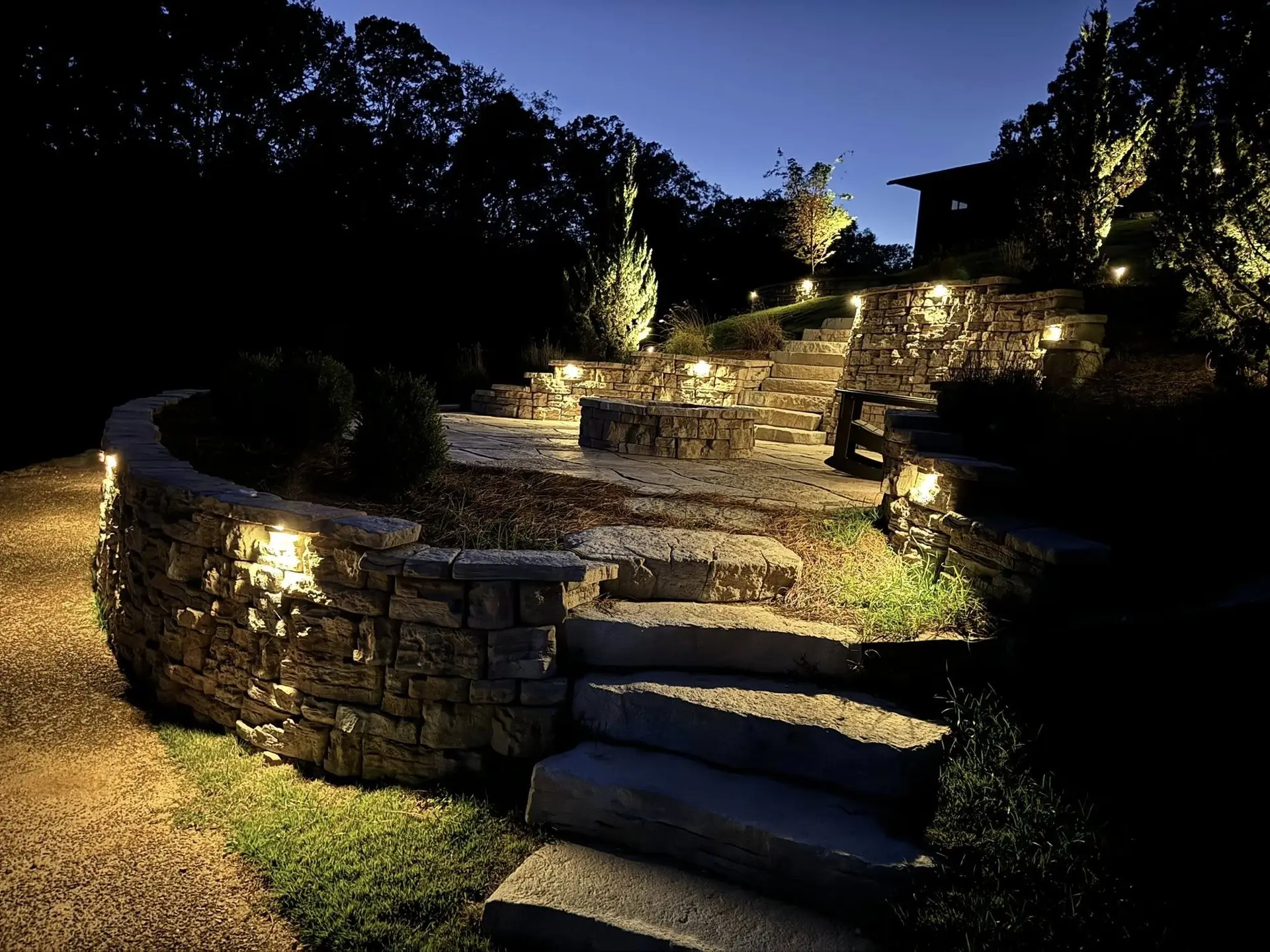
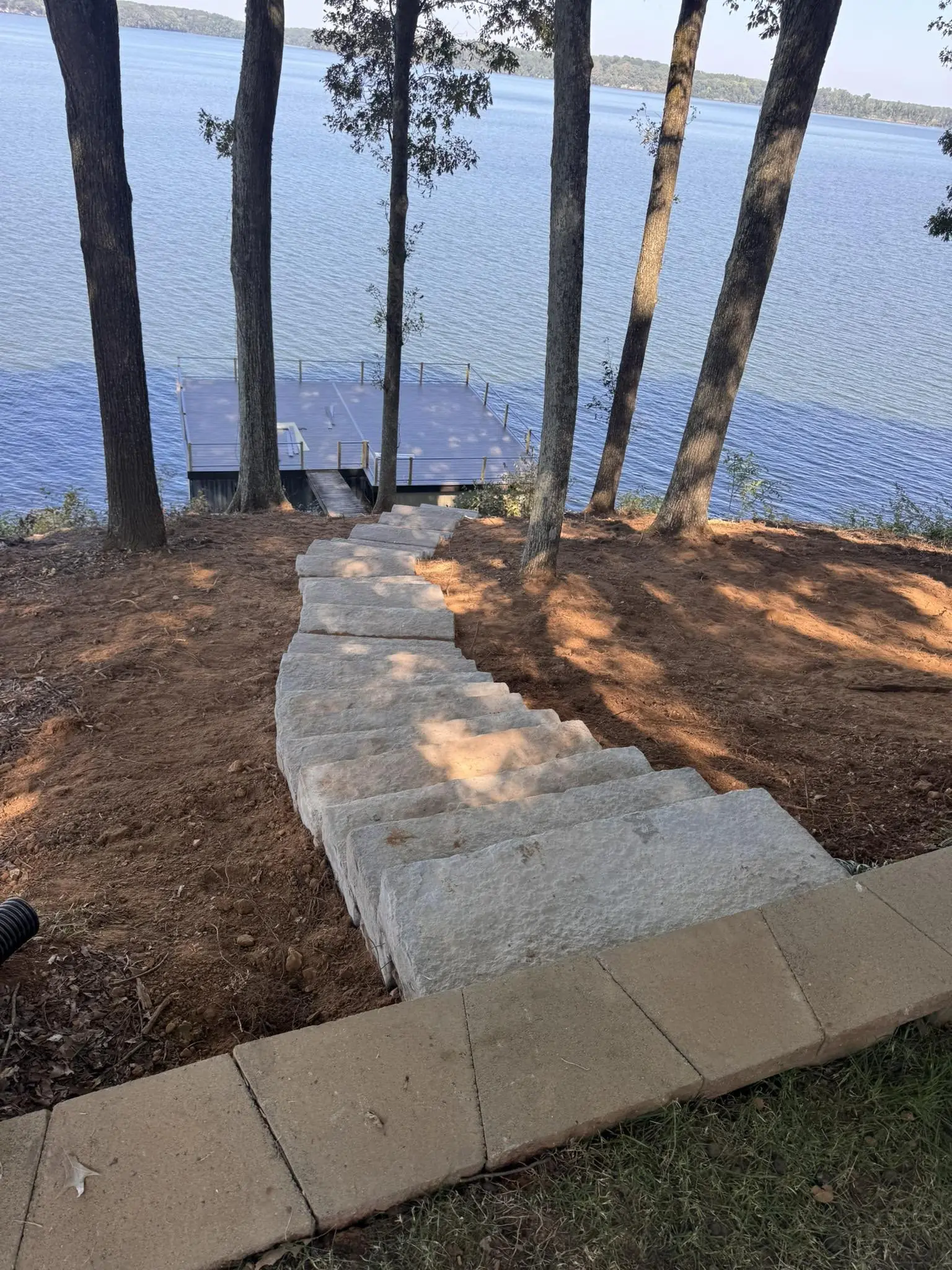
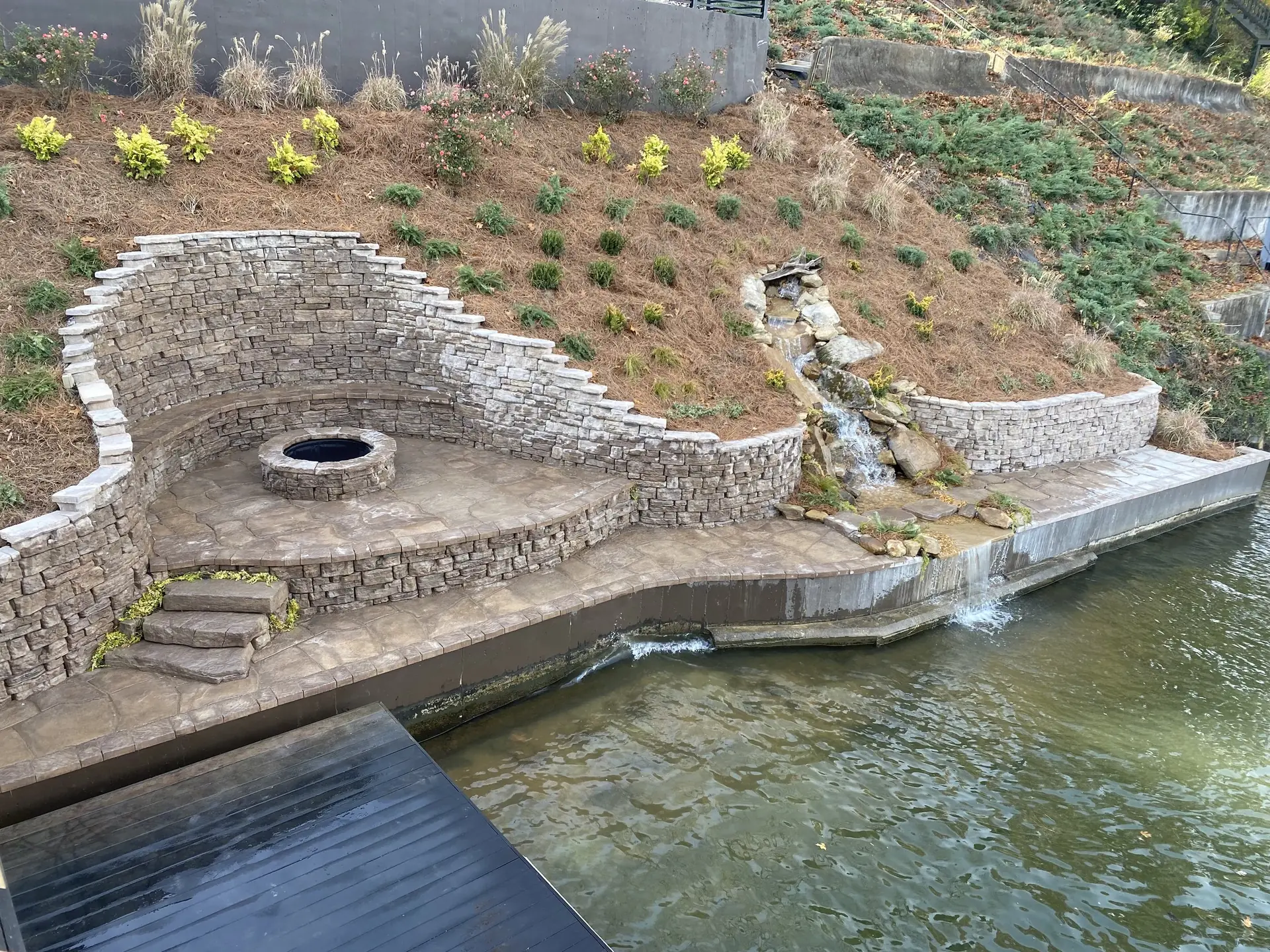
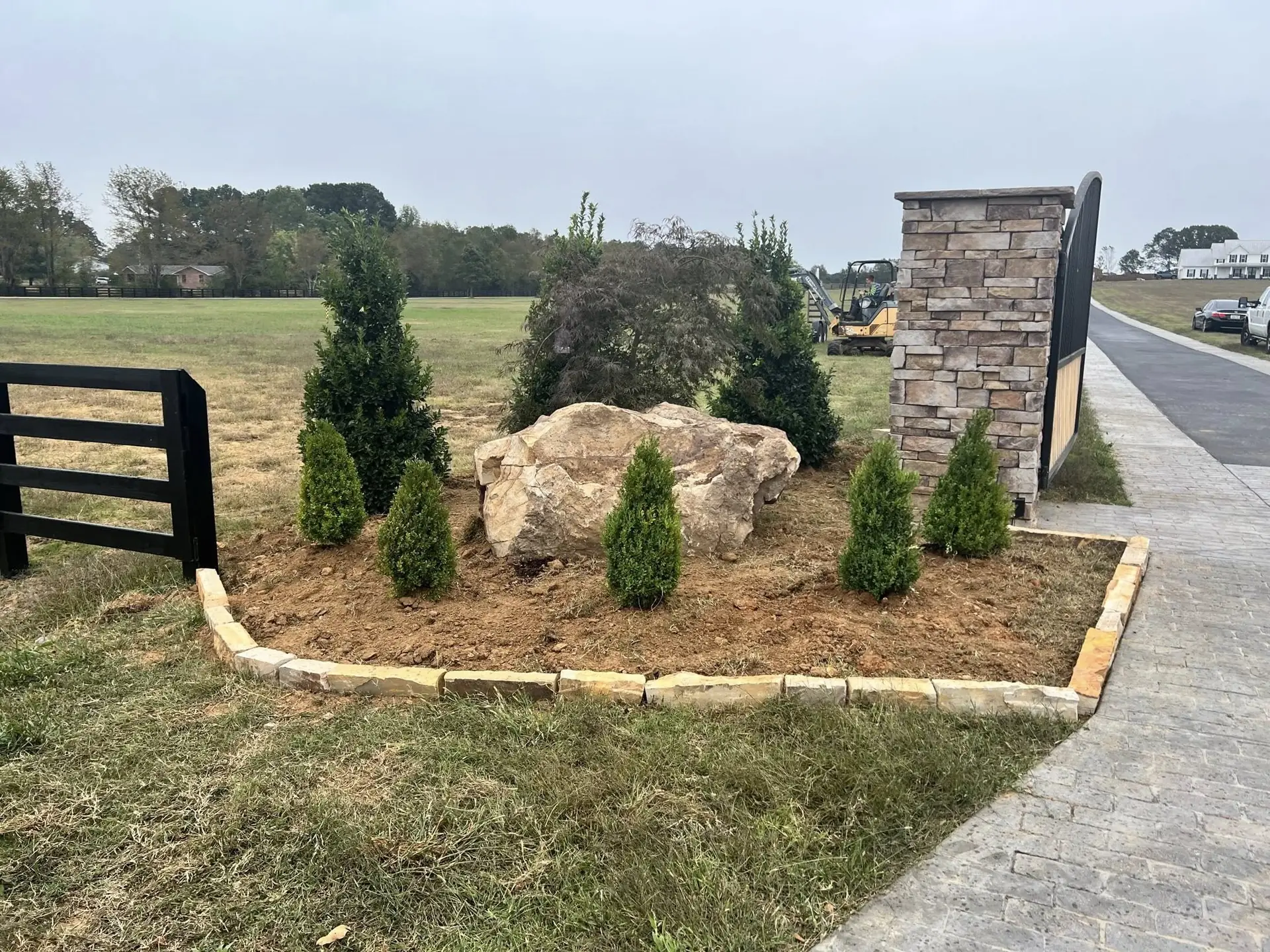
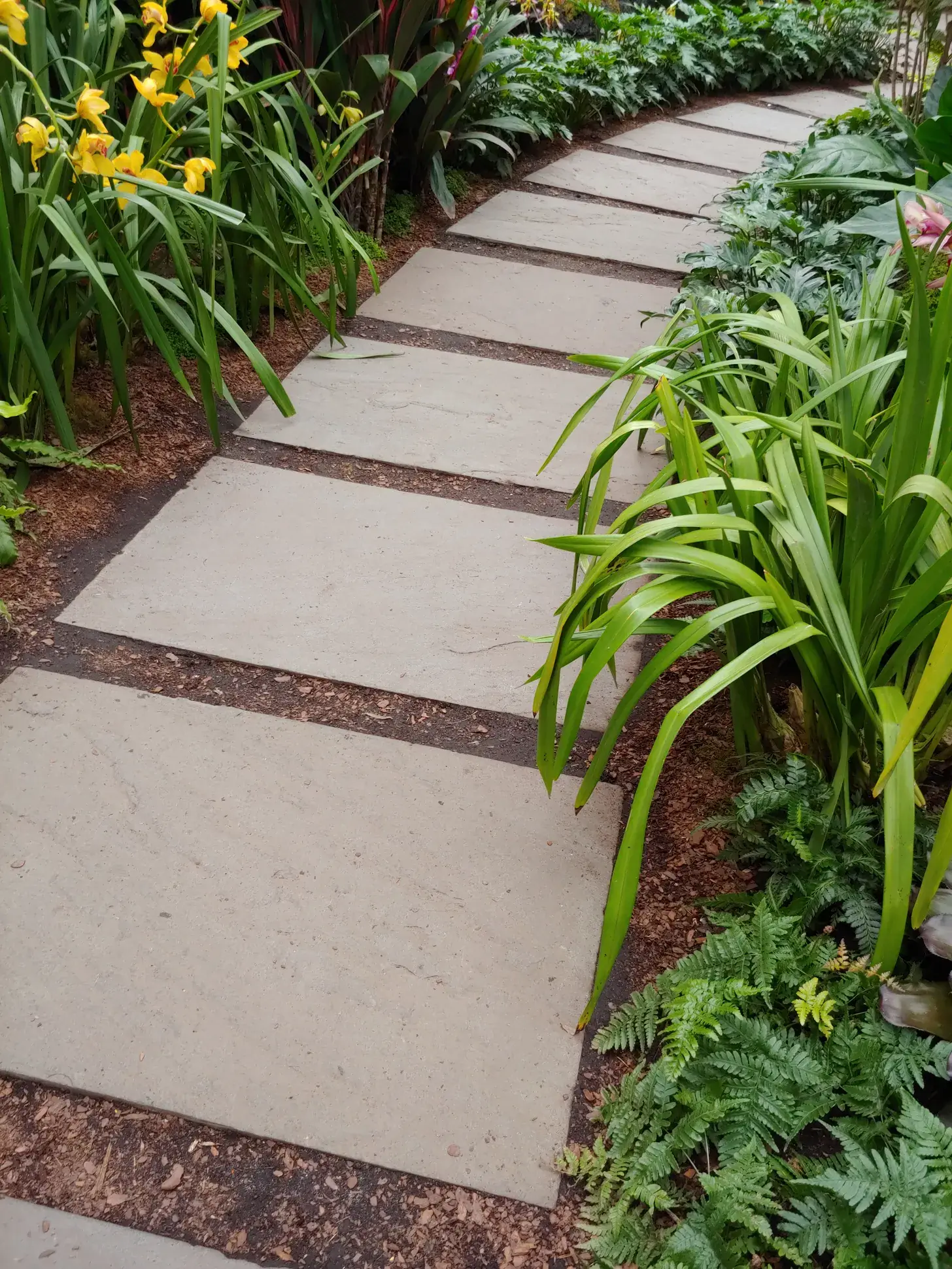
A wall is often where the rest of the work begins, because the level ground behind it becomes a patio or a planting bed. We also build stone steps down to the water, walkways through the garden, entry pillars and smaller accents.
How it goes
From first walkthrough to finished stonework
-
Site walkthrough
Grade, drainage and load, assessed before anything is designed.
-
Design and stone selection
A structural plan: base, drainage and stone chosen to suit the home and last for years.
-
Installation and care
Careful building and clear guidance, so walls and walkways hold up and keep their looks.
Answers
Retaining Walls & Stonework: common questions
How much does a stone retaining wall cost?
A stone retaining wall is priced by its length and height, the load it has to hold back, the stone, and how easily equipment can reach it. A low garden wall is a different job from a wall holding a hillside under a deck. We quote after walking the grade and the drainage.
Do I need drainage behind a retaining wall?
Yes. Water building up behind a wall is what pushes most walls over, so drainage and a proper base go in before any stone is set. We assess grade, drainage and load on the walk-through, and the structure comes first; the stone and the finish come after.
How long do stone retaining walls last?
A stone wall built on a sound base with drainage behind it can stand for generations. Walls fail early when water has nowhere to go and freeze-thaw cycles push them out of line. We use stone sourced and built for our region’s winters so the wall holds up structurally and keeps its looks.
Do I need a retaining wall?
You likely need one if a slope is washing out, soil is sliding onto a patio or drive, or a steep bank makes the yard hard to use. A wall turns that slope into level, usable ground. We also build stone steps, walkways, pillars and accents to go with it.
Also from Designs of Nature